Is This A Scam?
Paste a sketchy text, email, or DM. See exactly why it's dangerous — free, in seconds.
🔒 Don't paste passwords, SSNs, or full account numbers — we don't need them and you shouldn't share them with any tool.
How it works
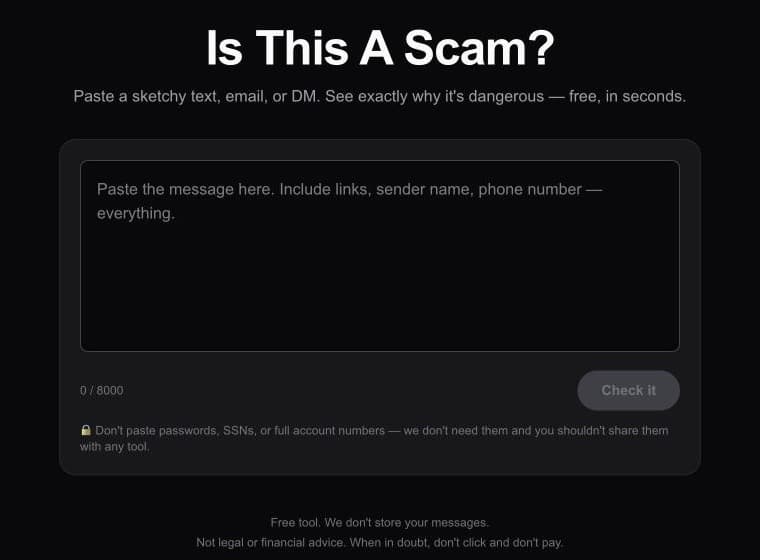
Paste the message
Copy the whole thing — sender address, links, phone number. The details are where the tells live.
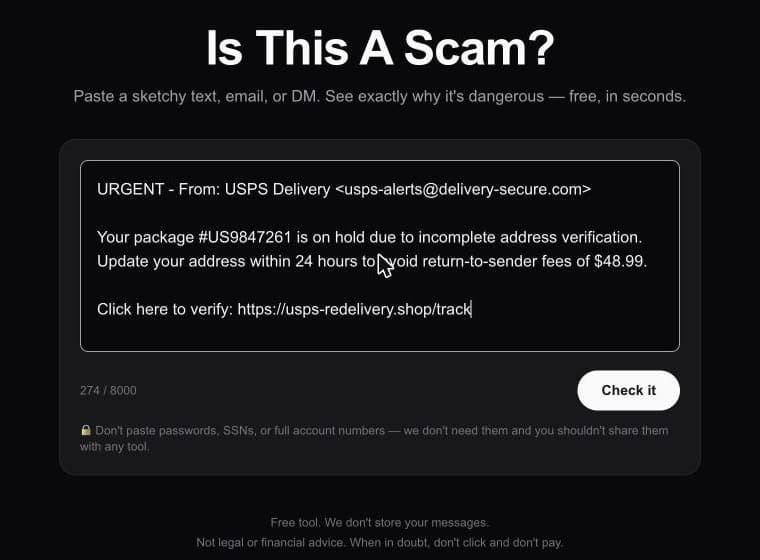
Hit check
No account, no email, no payment. It reads the message and comes back in a few seconds.
See what it found
A verdict, the specific red flags in plain language, and what to do next — not just a score.
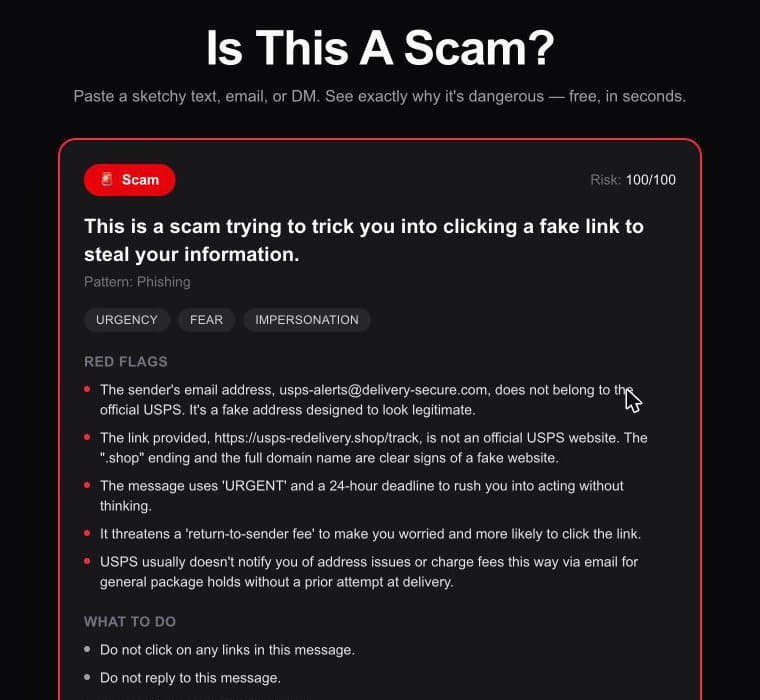
The example above is a real check of a fake delivery text. A verdict is an informed opinion about the words in front of it — it can't see who actually sent the message, so it can be wrong. Treat it as a second pair of eyes, not the last word.
What happens to what you paste
Your message is sent to the AI model that analyses it, and the result comes straight back to your browser. We don't write it to a database, and there's no account for it to be attached to.
You don't need to give us anything to use this. No email, no signup, no payment. We do count how many checks happen so we know if the site is working, but that counting isn't tied to the content of your message.
Please don't paste secrets. Passwords, one-time codes, Social Security numbers, and full card or account numbers are never needed to spot a scam. Remove them before pasting — here or anywhere else.
Common scams, explained
Recognise the pattern and you won't need a tool next time.
- USPS Text Scam: Package on Hold Messages"Your package is on hold" texts asking for a small redelivery fee.
- PayPal Invoice and Money Request ScamsReal PayPal emails for fake charges, designed to make you call a fake support line.
- Facebook Marketplace Scams: Buying and SellingOverpayment, fake shippers, and the verification-code trick.
- Job Offer and Recruiter ScamsToo-good offers, upfront "equipment" fees, and fake check deposits.
- "Wrong Number" Texts That Aren't AccidentsThe friendly stranger who texted "the wrong number" on purpose.
- How to Check a Suspicious Link Before You ClickRead any URL safely — where the real domain hides and how lookalikes work.
- Romance Scam Warning SignsThe patterns that show up long before money is ever mentioned.
- Bank Fraud Alert Texts: Real or Fake?Real and fake fraud alerts look identical. The safe habit that works either way.
- Crypto Investment Scam Warning SignsFake platforms, fake profits, and the withdrawal fee that never ends.
- How to Report a Scam (and What to Do First)Already clicked or paid? The order to act in, and where to report.
Common questions
- Is this free?
- Yes. There's no account, no email required, and no payment. You paste a message, you get an answer.
- What should I avoid pasting?
- Never paste passwords, one-time passcodes, Social Security numbers, or full card or account numbers — not here and not into any other tool. None of that is needed to judge whether a message is a scam. Paste the message itself: the wording, the links, and the sender address are what matter.
- Can the checker guarantee something is safe?
- No, and it's worth being clear about that. It reads the text you give it and explains the patterns it recognises. It cannot see who actually sent the message, whether a link's destination has changed, or what happens after you click. It can be wrong in both directions — calling a genuine message suspicious, or missing a well-written scam. Treat it as a second opinion, not proof.
- What should I do if I already paid or clicked?
- Act quickly and in order: contact your bank or card issuer to stop or reverse the payment, change the password for any account you entered details into, and turn on two-factor authentication. Then report it. Our guide on how to report a scam walks through the steps and the official places to file a report.
- Do you store the messages I check?
- No. The message you paste is sent to the model that analyses it and the result comes back to your browser. We don't save it to a database and we don't build a profile from it.
Want simple scam alerts for your family?
Join the early-access list. This is an idea we're testing, not an active protection service — nothing is monitored today, and joining changes nothing about your accounts.